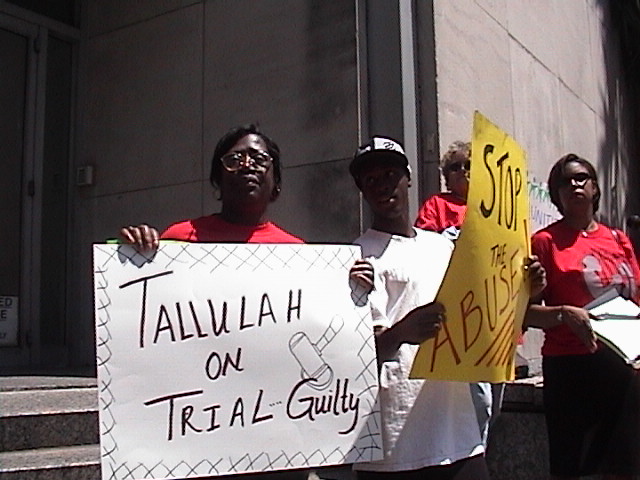
This June marks the anniversary of the closure of the Tallulah Correctional Center for Youth—a pivotal moment in Louisiana’s youth justice movement and a defining win led by families. As part of our 25 Stories for 25 Years campaign, we’ve spent months centering people and personal journeys. This month, as the nation honors Juneteenth and a legacy of liberation, we zoom out to reflect on a moment that transformed what people believed was possible.
Tallulah opened in 1994 under the wave of “tough on crime” policies and the “superpredator” myth. Most of the young people incarcerated there were not there for violent offenses. Many had significant mental health needs. And almost all were sent far from home, into a facility that quickly became known for violence, neglect, and abuse.
Families knew something was wrong long before the state acknowledged it. They received calls about broken bones, isolation, and conditions no child should endure. What began as fear and frustration turned into collective action.
Gina Womack, co-founder of Families and Friends of Louisiana’s Incarcerated Children (FFLIC), has often reminded us that the power of the movement came from families themselves:
“Families and Friends turned out to be the missing piece… When you put faces and names on this issue, folks see that these aren’t ‘throwaway kids.’ They’re children with families who love them.”
That truth changed everything.
Parents who had been isolated found one another. They organized, testified, marched, and held the system accountable. They built the Close Tallulah Now (CTN) campaign—not just to improve conditions, but to shut the prison down entirely.
Grace Bauer, a parent leader, captured the urgency that fueled the movement:
“We were sick with fear for our children… In the early days we didn’t have a lot going for us but we had hope and in our numbers we found strength.”
That hope—and that strength—moved legislators, shifted public opinion, and led to the passage of Act 1225 in 2003. The law called for sweeping reform, including the closure of Tallulah and investment in community-based alternatives.
Less than a year later, on June 4, 2004, Tallulah closed its doors—six months ahead of schedule.
It was a victory hard fought and deeply felt.
For Grace and so many others, the closure was not just political—it was personal:
“Our victory over corrupt politics and power in Louisiana has changed me as a parent and a person… With the victory of the campaign, each of us became stronger individuals.”
As we approach Juneteenth, this story takes on even deeper meaning.
Juneteenth marks a moment when freedom came years after it was promised—when the news of emancipation finally reached those who had been waiting. It is a reminder that change on paper does not always translate into change in people’s lives.
Act 1225 tells a similar story.
The law promised transformation. It envisioned a system rooted in care, community, and opportunity—not punishment. And while Tallulah closed, the full vision of that transformation was never realized.
Instead, many of the same challenges persist today: young people still waiting for mental health support, for real alternatives, for dignity in the systems meant to serve them.
Gina Womack has been clear about this unfinished work:
“The problem wasn’t their parenting. The problem was a system designed to punish children instead of supporting them.”
Families are still pushing for the promise of Act 1225 to be fulfilled—not just in policy, but in practice.
The closure of Tallulah didn’t just shut down a prison. It reshaped what people believed was possible. It proved that a parent-led movement could take on a system—and win.
It also built something enduring: a network of families, leaders, and advocates who continue to fight for a future where children are supported, not criminalized.
Today, we hold both truths.
We celebrate the victory of closing Tallulah—the lives changed, the harm interrupted, the movement built.
And we honor the unfinished work—the promises still waiting to be realized, the young people still deserving of care.
Because, like Juneteenth reminds us, freedom is not just declared. It must be delivered.
And the work continues—together.
(To learn more, watch the Close Tallulah Now short documentary: https://bit.ly/closetallulahnow)