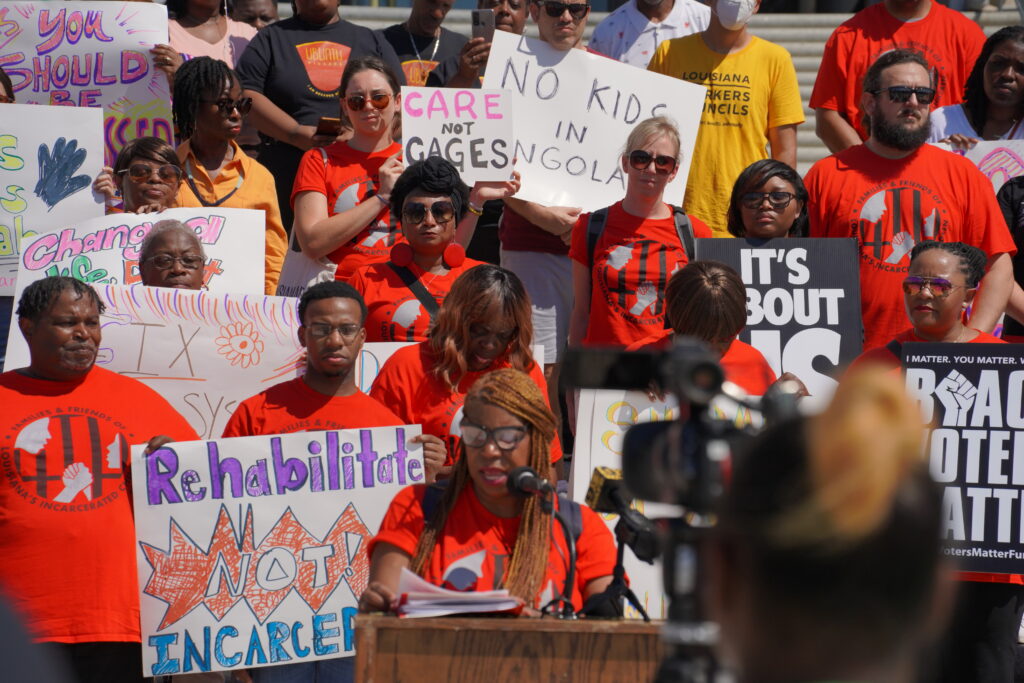
For years, directly impacted youth, families, organizers, and advocates have fought to move Louisiana away from punishment and toward healing. We have pushed for investments in mental health care, education, family support, and therapeutic models of care instead of cages and incarceration. We have worked to pass reforms like Act 1225 because we know young people need support systems, not systems that criminalize trauma and poverty.
But none of that work happens in a vacuum.
Policy is shaped by politics, and politics are shaped by representation.
That is why the U.S. Supreme Court’s decision in Louisiana v. Callais sets a dangerous precedent for our entire nation. The decision is not just about maps and districts. It is about power — who has it, who gets locked out of it, and whose communities are treated as disposable in the decisions that shape our futures. For those of us fighting for youth justice, this ruling is a further threat to progress in an already challenging political environment.
The Callais decision will make it even harder for impacted Black communities and other marginalized communities to elect leaders who understand the realities our young people face every day. We know youth incarceration does not impact every community equally. Black youth and families have long borne the weight of over-policing, incarceration, underfunded schools, and disinvestment.
The leaders most likely to champion transformative youth justice solutions are often those who come from these communities or who have chosen to work alongside them.
This ruling risks shrinking the political power of the very communities leading the fight for change. That matters because implementing Act 1225 — and moving toward the real solution of a therapeutic model of care — requires champions. It requires elected officials who understand that incarceration is not treatment, isolation is not rehabilitation, and punishment does not heal trauma.
We cannot build a just youth justice system while simultaneously undermining the democratic participation of impacted communities.
The people closest to the harm must have the power to shape the solutions. That is true in organizing, in policymaking, and in democracy itself. But if this decision reminds us of anything, it is that change has never been handed to our communities willingly. Every advancement toward justice has come because people organized, built power, told the truth, and refused to back down.
So while this ruling may create new obstacles, it will not stop us. We will continue fighting to build political power in impacted communities. We will continue organizing and educating across Louisiana, cultivating youth and family leaders, and confronting power with our advocacy, including demanding representation that reflects the people most affected by these systems.
We will continue pushing for policymakers to create systems based on the evidence-based approaches we know can work to heal our youth and communities. Because our young people deserve care, dignity, and opportunity — and we are committed to building the power necessary to make that vision real.