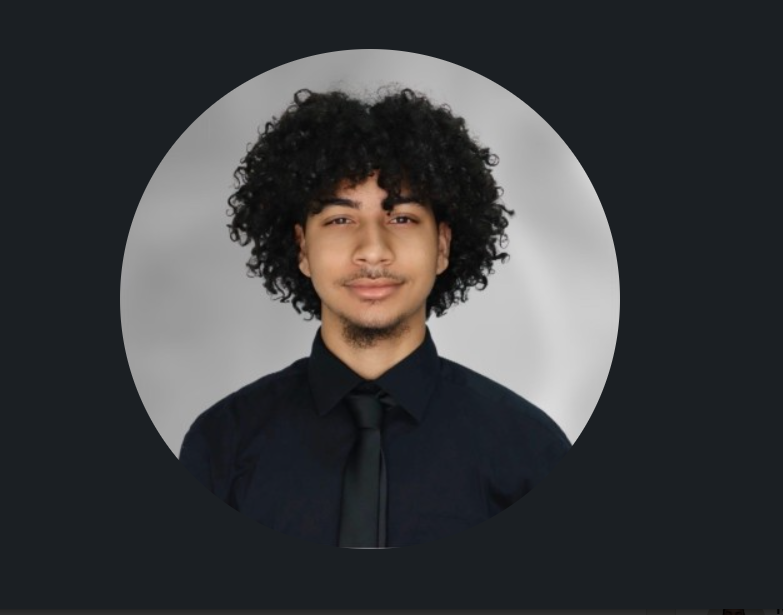
In his third year of college, Cary is living what he once described as a “new beginning.” His journey reflects how second chances are built slowly, through consistency and relationship, rather than through a single turning point.
Cary’s experience with school early on was shaped less by support than by control. He attended schools with metal detectors, police officers, and a quick reliance on suspension for minor behaviors. When he needed help, what he encountered instead was discipline.
“There were other ways to handle it instead of stopping me from learning,” he said.
He felt the absence of anyone to talk to. Counselors existed, but their role was administrative—focused on scheduling and paperwork rather than mental health or guidance. Over time, school felt less and less like a place designed for him.
“It just made me not like the school anymore,” Cary explained.
That disengagement, combined with limited resources and opportunity, eventually led Cary into the youth incarceration system. Inside, the loss of identity was immediate and unsettling. “You’re not identified as a person,” he said. “They give you a number—that’s how you’re known.”
The experience took a toll on his mental health and changed how he understood the world beyond the walls. “It messes with how you think,” Cary said. “When you get out, you feel like the world is different—even when it’s not.”
When Cary returned home, the expectation was clear: move on, catch up, figure it out. What made the difference was not more punishment or surveillance, but connection. After moving to New Orleans, a friend invited him to attend a meeting with Black Man Rising. Cary remembers being hesitant.
“I was never introduced to that type of life,” he said. “All I knew was running around with my friends in the streets.”
Still, he went—and stayed. What he found was something unfamiliar and grounding.
“It felt like a brotherhood,” Cary said. “A safe place I could talk. A place I could come to.”
Through Black Man Rising, Cary was introduced to Families and Friends of Louisiana’s Incarcerated Youth. What stood out was not any single action, but the steadiness of support. There were adults who noticed when he was struggling and intervened early.
“If I felt like I was about to do something I shouldn’t,” Cary said, “I could call somebody. They would talk to me, come get me, make sure I was okay.”
That consistency helped Cary rebuild confidence—not just as a student, but as a young person with agency and possibility. Through FFLIC, he began learning about his rights, about the system that had shaped his life, and about his ability to lead. He traveled, organized, and saw himself reflected in others who shared both his experiences and his hopes.
Looking back, Cary is clear about how pivotal that support was.
“I don’t even think I’d be here today if I took the wrong route,” he said.
Cary is studying history and criminal justice, with a minor in African studies. His interest in these subjects comes directly from lived experience and from what he learned through community organizing.
“I didn’t know what I wanted to do before,” he said. “Now I want to understand the system—and change it.”
Now, as he continues his college journey, Cary continues to build his leadership through ongoing involvement with FFLIC, including participating in a Grassroots Assembly—spaces where directly impacted people deepen analysis and share responsibility for shaping the work. His role has shifted from receiving support to helping sustain it.
Cary speaks plainly about what young people need to stay out of harm: opportunity, stability, and adults willing to step in with care instead of exclusion. He rejects the idea that punishment alone creates safety.
“Kids always deserve a second opportunity,” he says. “Because they are kids. They’re going to make mistakes no matter what.”
Second chances are not single moments. They are built by people who stay. Cary is still here, still choosing, and still moving forward.