By the time Chad Landry was a teenager, the criminal legal system was already shaping the course of his life. He was first incarcerated at 16. Long before adulthood, he learned what it meant to be watched, punished, and defined by his worst moments.
“For most of my life,” Chad says, “I was on drugs, committing crimes, and part of the problem.”
Addiction became a way to cope with trauma and instability that were never addressed—only met with discipline. Like many young people, Chad was responding to harm he didn’t yet have language or support to survive. Instead of intervention, care, or protection, the system only offered punishment and further harm.
By the time he entered prison as an adult, incarceration felt normalized.
“You don’t even say your name,” Chad remembers. “You say your number.”
Still, amid a system designed to isolate and dehumanize, Chad found connection. While incarcerated, he met Jennifer, who would become his wife and lifelong partner. Their relationship began with conversations about faith, accountability, and the possibility of building something different. When Chad was sent back to prison, Jennifer kept showing up—visiting consistently, holding hope when the future felt uncertain. They were married while Chad was still incarcerated.
Reentry was not easy. Addiction, survival, and rebuilding didn’t disappear overnight. What mattered most, Chad says, was having someone who didn’t walk away when things were hard.
“Some people come home and have nobody,” he says. “That makes all the difference.”
Years later, Chad became involved with Family and Friends of Louisiana’s Incarcerated Children (FFLIC). He was drawn to the organization’s focus on youth, families, and the systems that criminalize children long before they are given support. At the time, Chad was still finding his footing—but the conversations around purpose, accountability, and systemic harm resonated deeply.
One moment, in particular, stuck with him. After attending an FFLIC meeting, Chad saw a video shared from the gathering. Under his name were two words that had a big impact: Community Leader.
“That planted a seed in my spirit,” he says.
For someone who had spent years being treated as a number, as a problem to be managed, that recognition mattered. It didn’t erase the past—but it opened the door to imagining a future where his lived experience held value, where responsibility and leadership were possible.
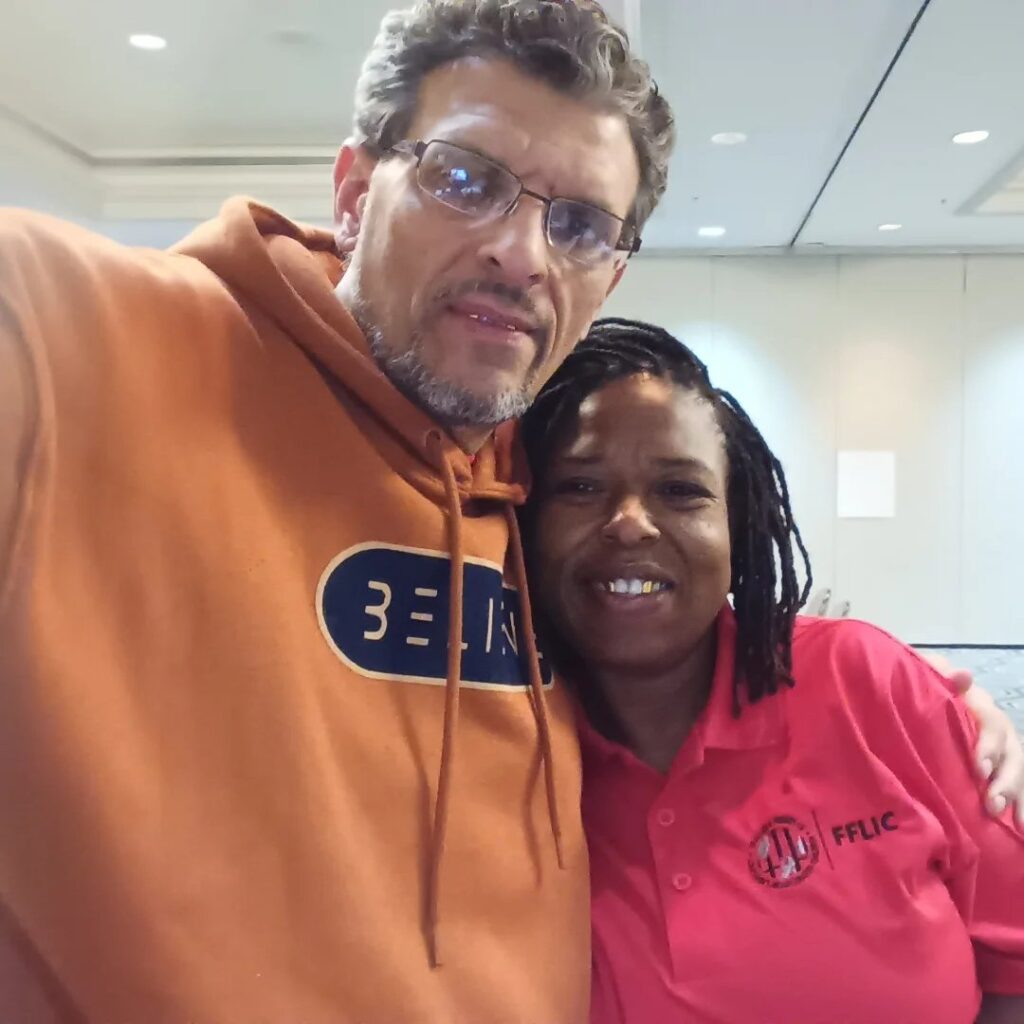
Chad has continued to be a dedicated member of FFLIC and unconditional support for his wife Jennifer, who is FFLIC’s Lafayette Chapter Lead. He has deepened his understanding of how his personal history connects to broader patterns he had lived inside: how children are criminalized early, how punishment replaces problem‑solving, and how systems condition young people to expect incarceration as inevitable.
“We’re too quick to throw kids away for doing things that kids do,” Chad says. “We never stop to ask what’s really going on in their lives.”
Those insights pushed Chad beyond reflection and into action.
Today, Chad is a Co‑founder, along with Jennifer, of Speaking 2 Inspire thru Experience, a nonprofit organization dedicated to mentoring and supporting young people facing difficult challenges. Grounded in lived experience, the organization takes a holistic approach—working with both youth and parents to build communication, accountability, and the life skills necessary to succeed. As a mentor to at‑risk youth, Chad draws directly from what he wishes he had received as a child: adults who saw potential instead of pathology, guidance instead of labels.
“If someone had told me when I was young that I was loved, that I had purpose,” he reflects, “my story could’ve looked very different.”
Second Chance Month, for Chad, isn’t about feel‑good redemption narratives. It’s about telling the truth: people change when systems make room for growth, when someone is willing to name their humanity before demanding their transformation.
Now, Chad spends his time mentoring, speaking, and walking alongside young people who are being written off far too early—offering what the system rarely does: honesty, structure, and the belief that another path is possible.