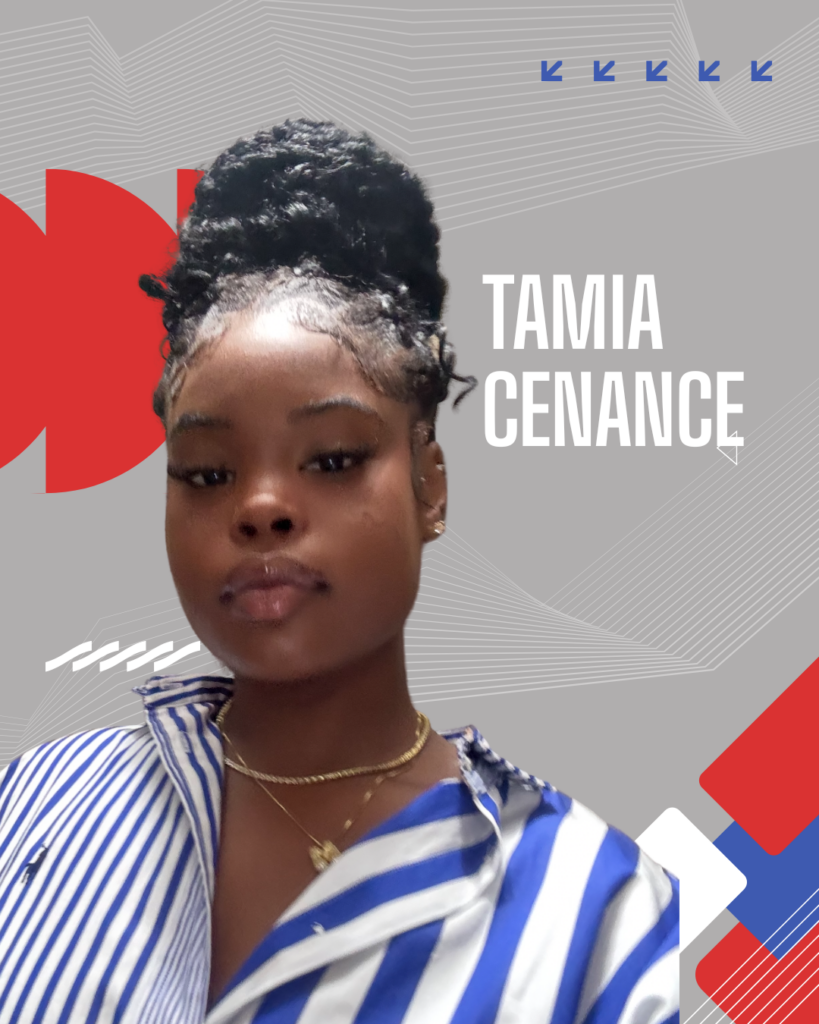
By the time Tamia Cenance walked into her first FFLIC gathering at 12 years old, the movement had already shaped her family for decades. What began with her grandmother’s fight to protect her son had evolved into a statewide force for justice—and for Tamia, it became the foundation of her own leadership.
“I first got involved with FFLIC when I was around 12 or 13. My grandmother is a co-founder, and she brought us to the gala and we saw what FFLIC was about.”
Tamia grew up in New Orleans’ East Ninth Ward, navigating the same systems that have impacted generations of young people in Louisiana. Her father’s experience with youth incarceration—particularly at Tallulah—was not just family history. It was a defining reality that shaped how she understood the world.
“With my father’s experience being incarcerated as a youth, he explained to me how brutal and unfair the system was… and that’s why I fight to make sure that no other kid is treated like my father was.”
That understanding connected her to something deeper than a program. It connected her to a legacy.
As FFLIC marks 25 years, Tamia’s story reflects what it means to sustain organizing across generations: a grandmother who fought to close youth prisons, a father whose experience exposed their harm, and a young leader who turned that history into action.
After witnessing the impact of Black Men Rising, Tamia and her peers recognized that young women needed a space of their own. Together, they created Black Girls Rising.
“We were inspired to found Black Girls Rising after seeing how great Black Men Rising were… we knew how much girls needed support in our community.”
What they built was more than a program. It was a sisterhood grounded in trust, healing, and shared growth.
“In Black Girls Rising we’re really like a sisterhood… we talk about our feelings, share experiences, and support each other.”
That commitment to building what was missing is part of what defines FFLIC’s approach—not just working with individuals, but investing in entire families and communities over time.
Tamia’s story is inseparable from that broader system of care. Her mother, Tangea, and her sister Tayla were also part of FFLIC—each finding their own pathway through the organization’s support. What might begin as a single point of connection often grows into something much deeper: a network that surrounds families with advocacy, knowledge, and love.
“From my grandma to my dad to me… FFLIC is still loving and supportive to all three of us.”
That continuity matters. It’s what transforms moments of intervention into long-term change.
Through FFLIC, Tamia gained opportunities that extended far beyond what systems typically offer young people. But just as important, she gained the tools to advocate for herself and to pass that on to others. Those tools showed up in both big and small ways—from helping peers navigate difficult situations to standing up for herself within her own school. They also shaped her vision for what real safety and support should look like.
“Youth are not the problem… if they had the support from their community, then they wouldn’t have to be in that position.”
Through Black Girls Rising and FFLIC’s campaigns, Tamia is part of a broader effort to reimagine systems that too often punish instead of support. Her leadership reflects a belief that has guided FFLIC for 25 years: that young people deserve care, opportunity, and dignity. And she carries that belief into her future.
“I joined FFLIC as a youth member, and with that I’ve been able to write an op-ed, travel across the United States, and start my own business… and it’s leading me toward my dreams.”
Tamia’s journey is a reflection of what sustained, intergenerational organizing makes possible. It’s not just about one young person building their power—it’s also about families growing stronger together, across time.
Through her grandmother’s advocacy, her father’s experience, her mother’s and sister’s support, and her own leadership, Tamia’s story holds a larger truth:
When we invest in families—not just individuals—
when we stay committed across generations—
we don’t just change outcomes.
We build legacies that continue.